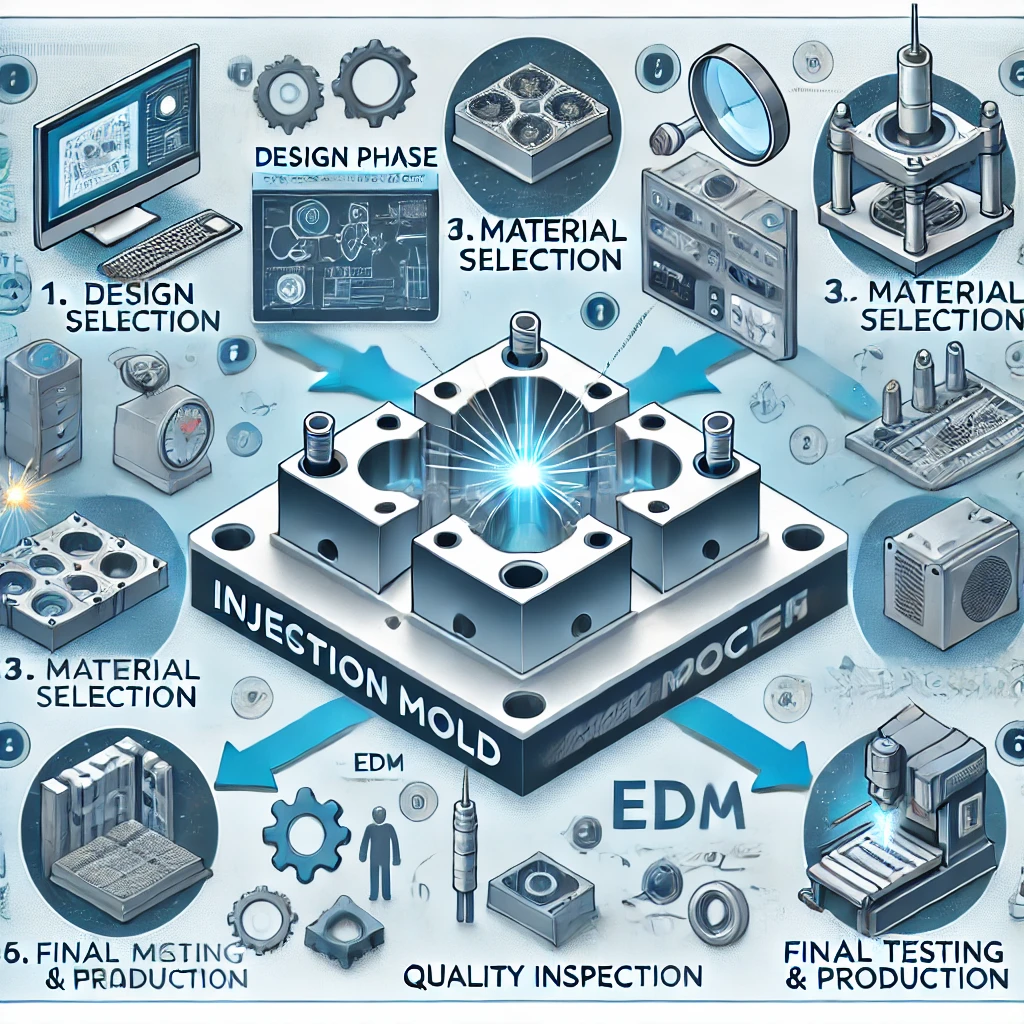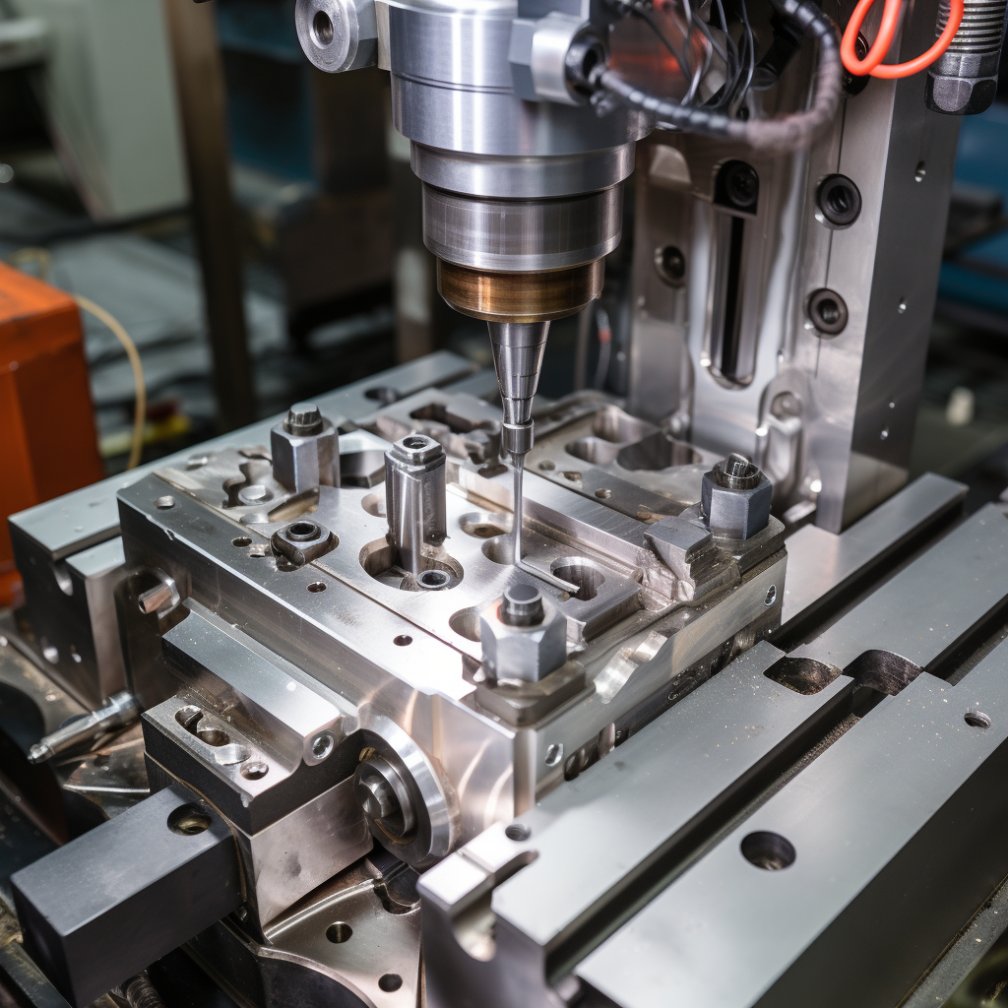
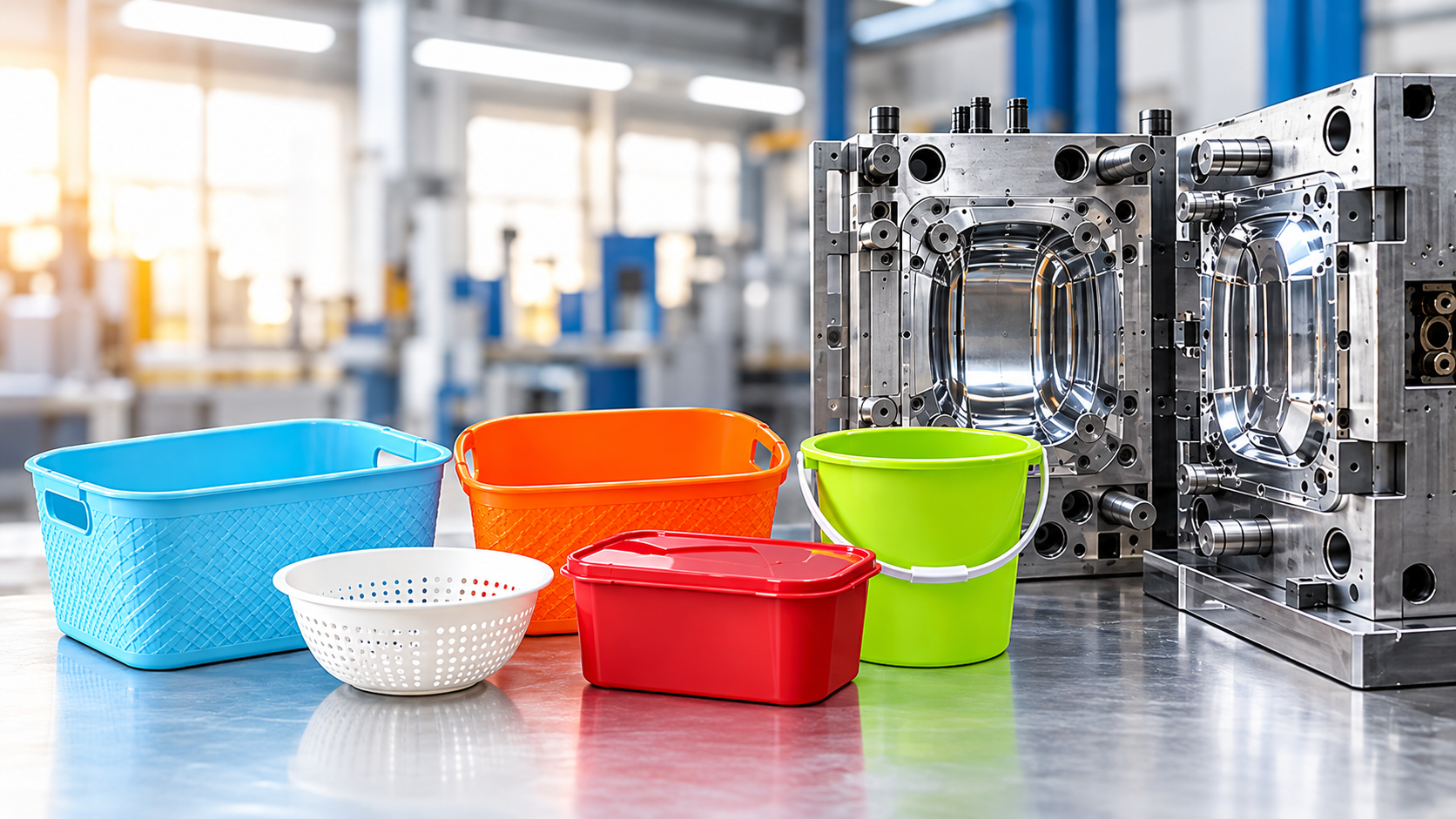
In the plastic manufacturing industry, the quality of the final product is often determined long before the first production cycle begins. While the choice of plastic material, injection molding machine, and production process all matter, one component plays a particularly important role: the Mold. “A good plastic product starts with a good mold” is more than just a statement—it is an important principle for plastic manufacturers.
The Mold Determines Product Accuracy
The mold is the foundation of the product’s shape and dimensions. Features such as wall thickness, ribs, handles, corners, textures, snap fits, and other details must be accurately incorporated into the mold design.
Even a small error in mold design can result in:
- Dimensional variations
- Warpage
- Sink marks
- Flash
- Short shots
- Uneven wall thickness
- Assembly problems
A precise mold helps manufacturers maintain the required product dimensions and consistency.
Good Design Improves Production Efficiency
A mold is not simply a cavity that creates the shape of a product. It must also be designed for efficient injection molding.
Important considerations include:
- Gate location and type
- Runner design
- Cooling channels
- Ejection system
- Venting
- Parting line
- Draft angles
- Cycle time
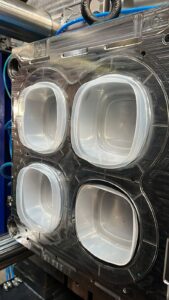
- Number of cavities
When these elements are properly designed, the mold can support smoother production and more stable molding cycles.
Cooling Design Matters
Cooling is one of the most important aspects of injection mold design.
Plastic needs to cool sufficiently before the product can be ejected. An inefficient cooling system can increase cycle time and may contribute to dimensional instability or warpage.
A well-planned cooling system can help achieve more uniform cooling throughout the mold, supporting consistent product quality and efficient production.
Material Selection Affects Mold Life
Different plastic products and production requirements may call for different mold materials and treatments.
Factors such as:
- Production volume
- Plastic material
- Product size
- Surface finish
- Expected mold life
- Maintenance requirements
These should be considered when selecting mold steel and other mold components.
For high-volume production, investing in suitable mold construction can be particularly important because the mold may need to withstand thousands or even millions of production cycles.
Precision Manufacturing Makes the Difference
Even an excellent mold design needs accurate manufacturing.
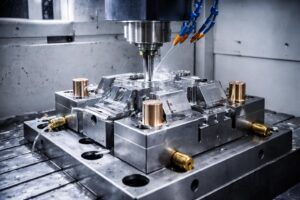
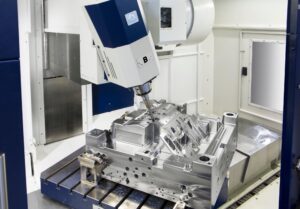
Modern mold-making involves processes such as CNC machining, EDM, grinding, polishing, and precision measurement. Proper machining and inspection help ensure that the manufactured mold matches the approved design.
Attention to detail is especially important for products with:
- Fine textures
- Tight dimensional tolerances
- Complex shapes
- Multiple moving components
- Interlocking features
- High-quality cosmetic surfaces
The Right Mold Maker Is an Important Partner
Choosing a mold maker should not be based only on the initial quotation.
Plastic manufacturers should consider the mold maker’s experience with similar products, engineering capabilities, manufacturing facilities, quality-control processes, communication, and after-sales support.
Before starting a project, it is useful to discuss:
Product requirements → Mold design → Steel selection → Manufacturing → Trial → Inspection → Corrections → Final approval
A structured process helps identify potential problems before mass production begins.
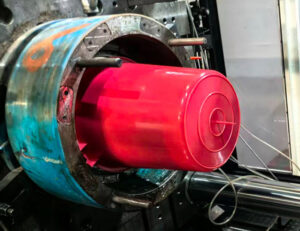
Mold Trials Are an Essential Step
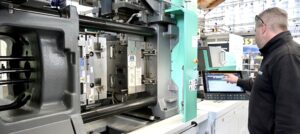
A mold should be properly tested before it goes into regular production.
During a mold trial, manufacturers can evaluate factors such as:
- Product dimensions
- Appearance
- Filling performance
- Ejection
- Flash
- Warpage
- Cycle time
- Cooling performance
- Part weight
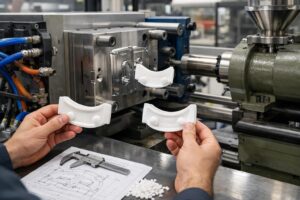
Trial samples provide valuable information and allow necessary corrections to be made before the mold is put into full-scale production.
A Good Mold Can Reduce Long-Term Costs
The cheapest mold quotation does not necessarily mean the lowest overall manufacturing cost.
A mold that requires frequent repairs, produces inconsistent parts, or has a long cycle time can increase production costs over its lifetime.
A properly engineered mold can contribute to:
Better consistency + lower rejection + stable production + easier maintenance = better long-term value
For this reason, mold quality should be viewed as an investment rather than simply an upfront expense.
From Product Idea to Production
For plastic manufacturers, the mold-making process should ideally begin with a clear understanding of the final product.
At the design stage, questions such as these should be addressed:
- What plastic material will be used?
- What machine will run the mold?
- What production quantity is expected?
- What cycle time is required?
- What surface finish is needed?
- How will the product be ejected?
- What dimensional tolerances are required?
- How many cavities are appropriate?
Answering these questions early can help create a mold that is better suited to the actual production requirements.
Conclusion
A plastic product may look simple once it comes out of an injection molding machine, but achieving that result requires careful engineering behind the scenes.
A good plastic product starts with a good mold.
From product design and mold-flow considerations to steel selection, precision machining, cooling, trials, and final inspection, every stage contributes to the performance of the mold and the quality of the finished product.
For plastic manufacturers, choosing the right mold-making partner and investing in proper mold engineering can make a significant difference—not only to the first production run, but throughout the mold’s working life.
Looking for a mold-making partner?
Onemold – Molds for the Plastic Industry provides mold solutions for applications including houseware, storage products, packaging, automotive parts, electrical appliances, medical products, cosmetics, and indoor & outdoor furniture.
From Mold development to Production-ready solutions, the right mold is where quality begins.
#packagingmoulds #goodmouldmaker #chinamoulds #moldmakers #qualitymoulds #moldpartner